
Nara was Japan’s first permanent capital, and it is still best seen on foot. Most Australian travellers come for a day from Kyoto or Osaka; stay overnight if you want the park at dawn, before the school groups arrive. Prices are shown in your currency, with Australian dollars as the default.
Is Nara worth a day or a night?
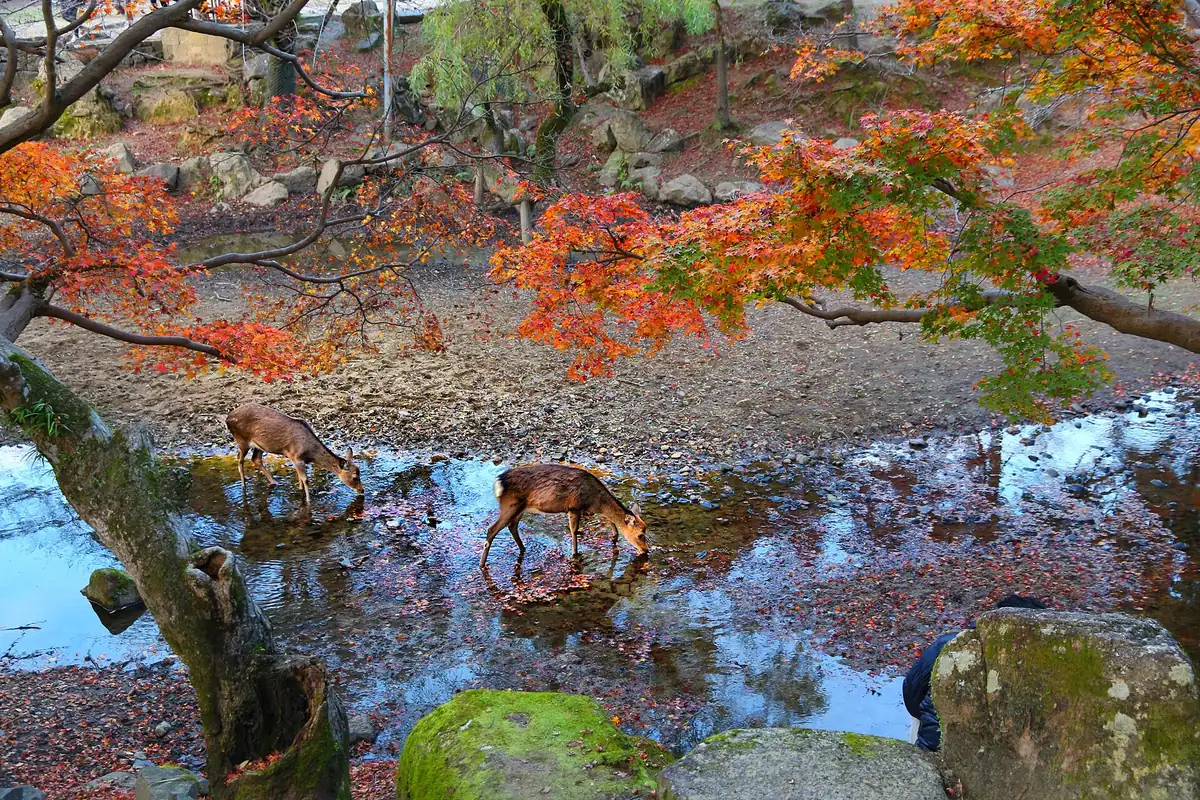
Founded in 710 and left as a capital less than a century later, Nara was left to its temples, its deer and its forests. The Great Buddha sits in the vast wooden hall at Todai-ji. Kasuga Taisha stands among lanterns and trees. Sika deer wander the park that ties the sites together. It is the quietest of the Kansai trio, and for many travellers the most affecting.
It suits people who want early Japanese history without Kyoto’s full intensity, and anyone completing a Kyoto-Osaka-Nara triangle. Think twice if you came for nightlife or shopping. Restaurants wind down early. Food is pleasant rather than the main event; eat in Osaka in the evening if that is your priority.

What does Nara actually cost?
There are two different numbers, and they should not be mixed up. If you already have a room in Kyoto or Osaka, the extra cost of a day trip is an editorial estimate of from approx. approx. A$18 to approx. A$32 (about 2,000 to 3,500 yen). That is only the increment, not the cost of an overnight stay.
If you stay overnight, the editorial stay-length estimates from the Nara page (per person, excluding flights) were:
These are approximate editorial estimates, not official prices. A two-day stay is more realistic than a ten-day one for most visitors.
| Style | 3 days | 5 days | 7 days | 10 days |
|---|---|---|---|---|
| Budget | 21,000 yen (from approx. approx. A$193) | 35,000 yen (from approx. approx. A$322) | 49,000 yen (from approx. approx. A$451) | 70,000 yen (from approx. approx. A$645) |
| Comfort | 42,000 yen (from approx. approx. A$387) | 70,000 yen (from approx. approx. A$645) | 98,000 yen (from approx. approx. A$903) | 140,000 yen (from approx. approx. A$1,290) |
| Premium | 85,000 yen (from approx. approx. A$783) | 145,000 yen (from approx. approx. A$1,336) | 200,000 yen (from approx. approx. A$1,842) | 290,000 yen (from approx. approx. A$2,671) |
Official and checkable: adult admission to the Great Buddha Hall at Todai-ji is 800 yen, last checked on the temple’s own page.
What should I book first?
- Flights: fly into Kansai (KIX). The Kintetsu line runs to Kintetsu Nara without a change.
- Hotels: stay overnight only if you want the park at dawn. Otherwise day-trip from Kyoto or Osaka.
- Experiences: a dawn walk needs no ticket. Book a tea ceremony if you want a seated hour in Naramachi.
- Rail pass: relevant for the wider trip, not for the park loop itself.
- Car hire: only useful if you plan to reach outlying western temples. Central Nara is a walking town.
When should I go, and what should I do?
March to May and October to November are the most comfortable months. Go early. See Todai-ji, walk the park without chasing the deer, and leave time for Kasuga Taisha. Buy official deer crackers only if you want to feed them, and give the animals space.
Where should I go next?
Back to Kyoto or Osaka, then west to Hiroshima if you have the days. The full journey is:
Visiting in spring? Our 2027 cherry blossom guide has average bloom dates for Nara. Nara is a day trip on all three of our 7, 10 and 14-day Japan itineraries.
Is there a useful official video for this place?
How do I get there from Australia or elsewhere?
The official airline and airport notes, including Qantas, ANA and JAL’s current winter timetable, are in the First-Time Japan guide and in the sourced table on this page where they apply. Flying times are not quoted here; check the airline site for current durations when you book.
Nara has no international airport. Fly into Kansai (KIX) or into Tokyo and continue by train, as you would for Kyoto or Osaka.
Where should I stay if I overnight in Nara?
Most visitors never stay. If you do, near Nara Park or Kintetsu-Nara is the straightforward choice for a dawn walk to the lawns and Todai-ji. JR Nara Station is fine if you are arriving late or leaving early on JR. Naramachi is quieter and more residential, a short walk from the park. An overnight is about the morning, not about a long list of extra sights.
How do I get around once I arrive?
A stored-value IC card is the simplest way to ride trains and buses, and to pay at many convenience stores. Official Welcome Suica and visitor ICOCA prices are in the First-Time Japan guide and, where they apply, in the sourced table on this page. Yen figures below were last checked 14 November 2026; Australian dollar conversions are approx.
Central Nara is a walking town once you reach the park. Use an IC card for the train from Kyoto or Osaka, then walk or use local buses for outlying temples. Check official operator pages for any Nara-only pass that might suit your dates.
What does a two day Nara plan look like?
Most people come for a day. If you stay overnight, this is a simple outline, not a guided tour.
Day 1. Arrive and walk the park in the afternoon, when it is still busy, so you know the paths. See Todai-ji and leave Kasuga Taisha for later if you are tiring. Day 2. Be in the park at dawn, before school groups, then take a slower temple or Naramachi walk and leave after lunch. If you only have one day, start as early as you can and do not try to add a second city the same afternoon. The park looks different at dusk as well, but dawn is the quieter gift if you stayed the night.
What is Nara like to eat?
Nara is not the food capital of this trip, and that is fine. You will find casual noodle shops, cafe meals and local sweets around the park and in Naramachi. Restaurants often wind down earlier than in Osaka. If dinner is the point of the day, eat back in Osaka or Kyoto. Do not feed the deer anything except official crackers, and not even those if you would rather keep your distance.
What etiquette should I actually bother with?
A little goes a long way. Say sumimasen and arigatou, take your shoes off when you see a step or a rack, and keep phone calls off quiet train carriages. At shrines and temples, follow the posted path and do not block the offering box for a photo. Cash is still useful for small places. Tattoos can be an issue in some public baths; ask when you book, or choose a room with a private bath.
Give the deer space. They are used to people, not tame pets, and they will go for bags and paper. Official crackers are sold if you want to feed them; do not offer other food.
What mistakes do first-time visitors make?
The usual ones are packing the days too tightly, buying a nationwide rail pass without doing the maths, and arriving without a way to pay for a train. Get the IC card or pass sorted on day one. People also underestimate summer heat and leave a mountain night or Hiroshima as a maybe that never happens. Book the rooms that will sell out, and leave some afternoons unplanned.
In Nara, the special mistake is mixing up a day-trip increment with the cost of an overnight stay, or arriving at noon and wondering why the park feels crowded.
How do I book flights and hotels?
Nara is usually reached from Kansai. The flight search below is set to Osaka (OSA). Search links below open Aviasales with a departure city near you (Sydney if we cannot tell), and Trip.com’s hotel search for your region. These are starting points, not quotes.
Which figures have been checked against official sources?
Yen amounts below are as published on the official pages, last checked 14 November 2026. Australian dollar figures are approx. conversions using the ECB reference rate via Frankfurter on 13 November 2026 (1 AUD = 108.56 JPY). They are estimates, not a ticket price.
| Item | Official figure | Source |
|---|---|---|
| Todai-ji Great Buddha Hall, individual adult admission | 800 yen (approx. approx. A$7.37); ages 6-12, 400 yen. A joint pass for the hall and Todai-ji Museum is 1,200 yen for adults. Hours: 7:30-17:30 April to October, 8:00-17:00 November to March. | Todai-ji, Opening Hours / Admission Fees |
| Visitor ICOCA (original design), JR West, Kansai-airport Station | 2,000 yen (approx. approx. A$18.42), including a 500 yen deposit. One per person, Temporary Visitor status, non-Japanese passport. Sold at the JR Ticket Office at Kansai-airport Station. | JR West, ICOCA |
Frequently asked questions
Should I day-trip or stay overnight?
Day-trip if your time is tight. Stay overnight if you want the park before 8am, which is the calmest hour.
How far is Nara from Kyoto and Osaka?
The usual train routes are often about 45 minutes from Kyoto and about 40 from Osaka. Treat those as planning estimates, and check current times on the operator site before you travel.
Do I have to pay to enter Nara Park?
The park itself is open. Individual temples charge their own admissions. Todai-ji’s official hall fee is in the table above.
Is it safe to walk among the deer?
Give them space, do not tease them with food, and keep bags closed. They are used to people, not tame pets.
When is Nara busiest?
Weekends, holidays, and cherry blossom or autumn weeks, especially from late morning.
Can I do Nara without staying overnight?
Yes. A day trip from Kyoto or Osaka is the usual plan. Stay overnight if you want the park at dawn.
Do I need a special pass for Nara?
Usually no. An IC card for the train and your own feet in the park will do for a first visit. Individual temples charge their own admissions, including the official Todai-ji hall fee in the table above.
Photo credits
- Hero image: Photo: Zairon, CC BY 4.0, via Wikimedia Commons.
