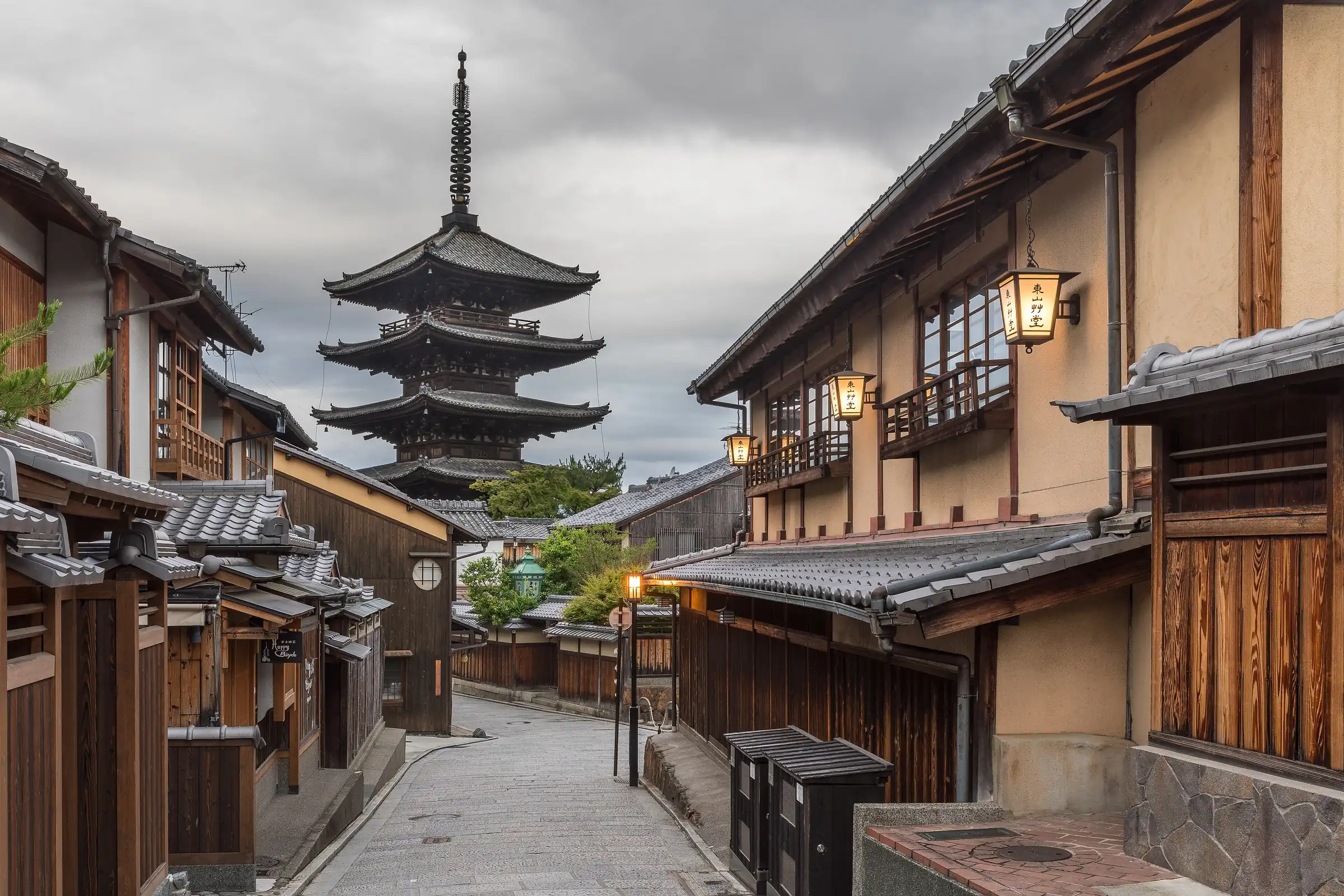
Kyoto was Japan’s capital for more than a thousand years, and it still asks you to slow down. Plan four days if you can, start at opening time, and treat one temple district as a morning rather than a list. Osaka is close if you want a late night; Kyoto itself quiets early.
Is Kyoto the right city for you?
The Historic Monuments of Ancient Kyoto are a UNESCO World Heritage listing, and the city still has a living craft culture inside an ordinary modern town. The reward is not a checklist. It is one temple district in the morning, a long lunch, and an evening walk when the lanterns come on.
It suits travellers who value culture, craft and food over clubs, and photographers who will get up for dawn. Think twice if you want late nightlife (go to Osaka), if you cannot manage July and August humidity, or if you refuse an early start in cherry blossom or autumn weeks.

What does Kyoto actually cost?
A planning starting point is from approx. approx. A$83 a day on a tight budget (about 9,000 to 13,000 yen) and from approx. approx. A$202 a day in the mid range (about 22,000 to 32,000 yen), excluding flights. Peak-season rooms can double. Temple entries are often a few hundred yen; treat those as estimates unless they appear in the sourced table, and confirm current fees on each site’s official page.
What should I book first?
- Flights: into Kansai (KIX) or Tokyo, then the Shinkansen.
- Hotels: book early for spring and November. Kawaramachi or Gion are walkable; Kyoto Station is better for value and transport.
- Experiences: book a tea ceremony or kaiseki lunch ahead. Fushimi Inari at dawn needs no ticket, but it does need an early alarm.
- Transport: an ICOCA card covers buses and subway. A Japan Rail Pass only pays off with Shinkansen travel to Tokyo or Hiroshima.
- Car hire: skip central Kyoto. Buses, subway and bicycles are the usual mix.
When should I go, and what should I do?
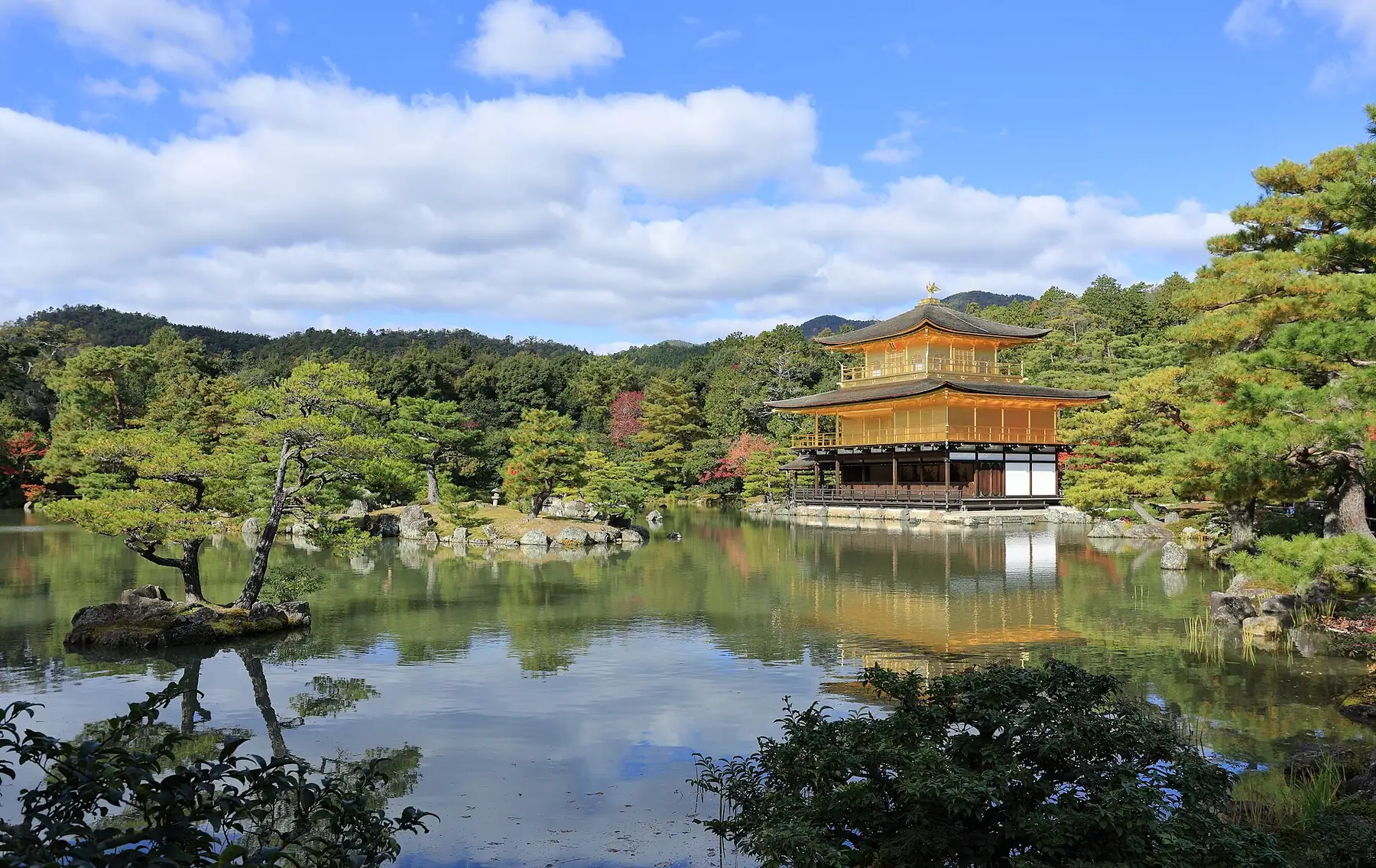
Late October to November, or late March to April for blossom, are the famous windows. May and December are quieter and still pleasant. Start at Fushimi Inari early, when the lower gates are not yet a queue (the shrine grounds are free). Arashiyama’s bamboo grove is brief and busy after breakfast. Kinkaku-ji, Ginkaku-ji and Kiyomizu-dera are paid sites and justify a slower visit if you go. Check the current Kiyomizu-dera admission fee on the official shrine site before you go; it is not listed in the sourced table on this page.
Where should I go next?
Nara is the natural day trip or overnight. Osaka is close for food and a later evening. Hiroshima sits at the western end of a longer route. The full journey is:
Visiting in spring? Our 2027 cherry blossom guide has average bloom dates for Kyoto. For a full route through Kyoto, see our 7, 10 and 14-day Japan itineraries.
Is there a useful official video for this place?
How do I get there from Australia or elsewhere?
The official airline and airport notes, including Qantas, ANA and JAL’s current winter timetable, are in the First-Time Japan guide and in the sourced table on this page where they apply. Flying times are not quoted here; check the airline site for current durations when you book.
Kyoto does not have an international airport of its own. Most Australian travellers arrive at Kansai (KIX) or at Tokyo, then continue by Shinkansen. Confirm the current arrival airport on your ticket rather than assuming a direct Australia-Kansai flight.
Where should I stay in Kyoto?
There is no single best base, only a trade-off between the Shinkansen and a morning walk.
Kyoto Station is the practical choice for a late arrival or an early westbound or eastbound train. Downtown around Shijo and Kawaramachi is handy for restaurants, buses and a central subway hop. Higashiyama and the Gion side put you closer to temple mornings on foot, and they are also busier and often dearer. Arashiyama is a pleasant district, but it is an awkward first-trip base if you also want Fushimi Inari and the eastern temples. Pick the first morning you care about, then book, rather than chasing a score.
How do I get around once I arrive?
A stored-value IC card is the simplest way to ride trains and buses, and to pay at many convenience stores. Official Welcome Suica and visitor ICOCA prices are in the First-Time Japan guide and, where they apply, in the sourced table on this page. Yen figures below were last checked 14 November 2026; Australian dollar conversions are approx.
Kyoto City’s official Subway and Bus 1-Day Pass is 1,100 yen (approx. approx. A$10.13) for adults and 550 yen (approx. approx. A$5.07) for children. It is valid for the calendar day it is activated, not for 24 hours, and it covers city subway and city bus lines plus listed Kyoto Bus, Keihan Bus and West Japan JR Bus routes (some seasonal and highway routes are excluded). An extra fee applies on late-night buses. Source: Kyoto City Transportation Bureau, Subway and Bus 1-Day Pass. For a single temple day on foot, a stored-value IC card may be enough.
What does a two or three day Kyoto plan look like?
This is a sample outline for a first visit, not a promise that you will have the lanes to yourself.
Day 1. Go to Fushimi Inari early, then spend the afternoon in a quieter temple or craft district rather than stacking famous gates. Day 2. Walk Higashiyama or Arashiyama in the morning, and leave one block of the afternoon empty. Kyoto rewards a slow hour more than a fifth stamp in the book. Day 3. Use the day for a Nara trip, or stay in Kyoto for a tea house or a neighbourhood you skipped. If you only have two nights, do not try to add Hiroshima as well.
What is Kyoto like to eat?
Kyoto is known for tofu, pickled vegetables and kaiseki, but you will also find noodles, coffee and plenty of casual meals near the stations. A formal kaiseki lunch or dinner should be booked. For a walking day, a simple lunch and an early dinner are easier than stacking restaurant reservations around temple hours. No dish here is being recommended as a health treatment, only as part of how the city actually feeds visitors.
What etiquette should I actually bother with?
A little goes a long way. Say sumimasen and arigatou, take your shoes off when you see a step or a rack, and keep phone calls off quiet train carriages. At shrines and temples, follow the posted path and do not block the offering box for a photo. Cash is still useful for small places. Tattoos can be an issue in some public baths; ask when you book, or choose a room with a private bath.
In Kyoto, do not block residential lanes or shrine paths for a photograph, and do not enter a private roji or doorway because it looks pretty. Geisha districts are working streets, not a set.
What mistakes do first-time visitors make?
The usual ones are packing the days too tightly, buying a nationwide rail pass without doing the maths, and arriving without a way to pay for a train. Get the IC card or pass sorted on day one. People also underestimate summer heat and leave a mountain night or Hiroshima as a maybe that never happens. Book the rooms that will sell out, and leave some afternoons unplanned.
In Kyoto, the special mistake is a late start at the most famous gates, then a taxi chase to the next one. Early and fewer is calmer.
How do I book flights and hotels?
For Kyoto, the usual airport is Kansai (KIX). The flight search below is set to Osaka (OSA). Search links below open Aviasales with a departure city near you (Sydney if we cannot tell), and Trip.com’s hotel search for your region. These are starting points, not quotes.
Which figures have been checked against official sources?
Yen amounts below are as published on the official pages, last checked 14 November 2026. Australian dollar figures are approx. conversions using the ECB reference rate via Frankfurter on 13 November 2026 (1 AUD = 108.56 JPY). They are estimates, not a ticket price.
| Item | Official figure | Source |
|---|---|---|
| Japan Rail Pass, ordinary adult, official online purchase | 7-day 50,000 yen (approx. approx. A$461); 14-day 80,000 yen (approx. approx. A$737) | JR Group, Japan Rail Pass types and prices |
| Kyoto City Subway and Bus 1-Day Pass | Adult 1,100 yen (approx. approx. A$10.13); child 550 yen (approx. approx. A$5.07). Valid on the calendar day of activation, not for 24 hours. Some routes excluded; late-night buses cost extra. | Kyoto City Transportation Bureau, Subway and Bus 1-Day Pass |
| Visitor ICOCA (original design), JR West, Kansai-airport Station | 2,000 yen (approx. approx. A$18.42), including a 500 yen deposit. One per person, Temporary Visitor status, non-Japanese passport. Sold at the JR Ticket Office at Kansai-airport Station. | JR West, ICOCA |
Frequently asked questions
How many days do you need in Kyoto?
Four days covers the essential districts without rushing. Five to seven lets you add Nara, Uji or Kurama and still keep one slow day. Three days only works if you start at opening time.
When is the best time to visit Kyoto?
Late October to November for autumn colour and dry weather, or late March to April for cherry blossom. May and December are quieter.
Is Kyoto expensive?
Often cheaper than Tokyo for food, similar for rooms. Our editorial figures are about 11,000 yen a day on a budget and about 27,000 yen in the mid range, with peak weeks much higher for hotels.
Do I need a Japan Rail Pass for Kyoto itself?
No. The pass covers Shinkansen and JR lines, while Kyoto runs mostly on city buses and subway. It only pays off if you also travel to Tokyo or Hiroshima.
How do I get around Kyoto?
Buses reach almost every temple but can be slow. The two subway lines are faster for longer hops. An IC card works on both. Cycling is excellent on the flat central grid.
Can I see geiko or maiko in Kyoto?
You may see them walking to appointments in Gion in the early evening. Do not block their path or take photos on streets where it is banned. For a respectful encounter, book a formal experience.
Can I do Kyoto as a day trip from Osaka?
You can, but you will only see one district. Kyoto is a morning city, and the best hours are before the day-trip crowds arrive.
Is Kyoto vegetarian friendly?
Shojin ryori around some temples is vegetarian. Elsewhere, fish-based dashi is common. Learn a clear phrase or carry a translation card.
Is the Kyoto 1-day pass a 24-hour ticket?
No. The official Subway and Bus 1-Day Pass is valid on the calendar day you activate it, not for 24 hours from first use. Adult price is 1,100 yen.
Should I stay near Kyoto Station?
It is practical for the Shinkansen and for a late arrival. For temple mornings on foot, a neighbourhood closer to Higashiyama or the subway can save you a commute. There is no single best base.
Photo credits
- Hero image: Photo: Basile Morin, CC BY-SA 4.0, via Wikimedia Commons.
